蛋白质是至关重要的宏量营养素,减重术后科学的补充,有助于维持肌肉力量和正常新陈代谢,预防和缓解脱发贫血等不适,降低消化道瘘的风险,对此,中美多部权威指南给出细致的量化建议。
Original Passage
Protein intake should be individualized, assessed, and guided by an RD regarding sex, age, and weight (Grade D) . A minimal protein intake of 60 g/d and up to 1.5 g/kg ideal weight per day should be adequate; higher amounts of protein intake—up to 2.1 g/kg ideal weight per day—need to be assessed on an individualized basis (Grade D) .
——cosponsored by AACE/TOS/ASMBS/OMA/ASA(2020)
The general protein recommendation for most post-MBS patients is at least 60 g of high quality protein/day or up to 1.5 g/kg of ideal body weight/day. Severe cases of hypoalbuminemia may require 2 g of high-quality protein/kg body weight/day.
Protein should be spread out throughout the day with meals and snack(s).
Solid proteins such as beef, pork, and chicken will increase fullness and satiety for longer periods of time compared to liquid or soft forms of protein (i.e., protein shakes, yogurt, or cottage cheese).
Protein foods with high bioavailability are absorbed and utilized more efficiently in the body (whey isolates, egg whites, red meat, poultry, fish).
Full Liquid Diet:Post-op day 2 through 7–14 days depending on the patient's condition. Full liquids should be high in protein, low in added sugar, lactose-free (soups, smoothies, meal replacements).
Semisolid/Soft Textures:A soft food stage typically begins 2–3 weeks after surgery. Consume high protein foods during meals.
——CPS by OMA (2024)
中文译文
蛋白质摄入量应根据性别、年龄和体重由营养师(RD)进行个体化评估并指导(D级)。每日最低蛋白质摄入量为60g,最高每日1.5g/kg理想体重的蛋白质摄入是足够的;更高剂量的蛋白质摄入量(最高达每日2.1g/kg理想体重)需根据个体情况另行评估(D级)。
——美国临床内分泌医师协会(AACE)、肥胖学会(TOS)、美国肥胖代谢外科学会(ASMBS)、肥胖医学协会(OMA)及美国麻醉医师协会(ASA)联合发布(2020)
对于大多数MBS(metabolic and bariatric surgery,代谢与减重手术)后患者,一般的蛋白质推荐摄入量为每日至少60g优质蛋白质,或最高可达1.5g/kg理想体重/天。严重低白蛋白血症病例可能需要摄入2g/kg体重/天的优质蛋白质。
蛋白质应通过每日的正餐及零食均匀分布摄入。
与液态或软质蛋白质(如蛋白奶昔、酸奶或乳酪)相比,牛肉、猪肉和鸡肉等固体蛋白质能更长时间地维持饱腹感和满足感。
具有高生物利用度的蛋白质食物(乳清分离蛋白、蛋清、红肉、禽肉、鱼类)在体内能被更高效地吸收和利用。
全流质饮食:术后第2天至第7-14天(具体时间取决于患者状况)。全流质饮食应富含蛋白质、低添加糖、无乳糖(适用于汤品、奶昔及代餐食品)。
半固体/软质饮食:软质食物阶段通常在术后2–3周开始。餐时应摄入高蛋白食物。
——美国肥胖医学会(OMA)临床实践声明(2024)
国内指南
为了预防蛋白质缺乏,一般建议SG术后的病人每天补充蛋白质60~80g,RYGB术后每天补充60~160g,BPD-DS术后每天补充90g。推荐乳清蛋白含量高的补充剂,更有利于人体吸收。
——中国肥胖及代谢疾病外科治疗指南(2024版)
术后膳食营养原则:蛋白质摄入量为40-80g/日,以减少营养吸收为主的手术方式,术后应在此基础上增加30%。
——肥胖症诊疗指南(2024年版)
小贴士
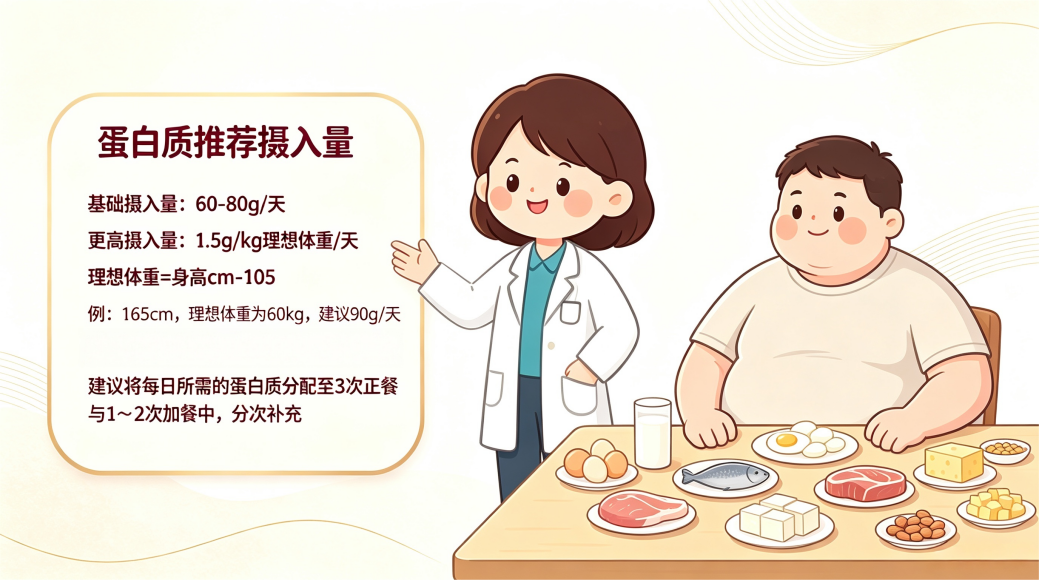
- 每日蛋白质推荐量:单纯胃袖状切除(SG)术后,初期建议以我国指南推荐的每日60~80克作为基础摄入量。随着身体逐步恢复,为了更好地维持肌肉量与基础代谢,您可以根据1.5g/kg理想体重/天进行补充。
- 分次进食以避免胃部不适:手术后由于胃容量受限,单次进食量较多容易引起胃胀或呕吐。建议将每日所需的蛋白质分配至3次正餐与1~2次加餐中,分次补充,细嚼慢咽,以利于身体温和吸收。
结束语
一起学习和推广健康减重的方法和理念!
- 参考文献:
- Mechanick J I, Apovian C, Brethauer S, et al. Clinical practice guidelines for the perioperative nutrition, metabolic, and nonsurgical support of patients undergoing bariatric procedures - 2019 update: cosponsored by American Association of Clinical Endocrinologists/American College of Endocrinology, The Obesity Society, American Society for Metabolic & Bariatric Surgery, Obesity Medicine Association, and American Society of Anesthesiologists[J]. Surg Obes Relat Dis, 2020, 16(2): 175–247.
- Benson-Davies S, Frederiksen K, Patel R. Bariatric nutrition and evaluation of the metabolic surgical patient: Update to the 2022 Obesity Medicine Association (OMA) bariatric surgery, gastrointestinal hormones, and the microbiome clinical practice statement (CPS)[J]. Obes Pillars, 2025, 13: 100154.
- 王勇, 梁辉, 张频, 等. 中国肥胖及代谢疾病外科治疗指南(2024版)[J]. 中国实用外科杂志, 2024, 44(8): 841–849.
- 国家卫生健康委员会肥胖症诊疗指南编写委员会. 肥胖症诊疗指南(2024年版)[J]. 中国循环杂志, 2025, 40(1): 6–30.
- 声明:博客内容仅为营养健康科普参考,仅供医学专业人士阅览,文中内容不构成任何诊疗、用药建议,营养补充方案需结合个体情况、定期随访结果,在专业医护指导下实行,特殊人群(孕期、慢性病等)请提前就医评估。本文知识产权归拜瑞斐所有,未经授权,不得转载。