OMA减重手术临床实践声明解读不同术式营养风险成因
减重代谢手术是改善重度肥胖与代谢相关问题的可靠干预手段,依靠重塑胃肠道生理构造,并随之调控肠道内分泌激素,进而实现减重获益。但也正因为胃肠道结构形态、内分泌环境的人为调整,也会带来各类需要我们多加留意的术后营养风险。
Original Passage
The benefits of MBS also come with some nutritional risks. For example, different MBS procedures have significant variation in the amount of absorptive gastrointestinal tract and stomach partitioning. Approximately 80 % of the fundus is removed during a sleeve gastrectomy (SG), while leaving the pyloric sphincter and intestines intact. More invasive procedures (i.e., Roux-en-Y gastric bypass (RYGB), distal RYGB, biliopancreatic diversion with duodenal switch (BPD-DS), single anastomosis duodenal-ileostomy with sleeve gastrectomy (SADI-S)), however, alter both the fundus and shorten the length of the small intestine leaving 75 cm-300 cm. This remaining segment of the small intestine is called the ‘common channel,’ the location where the food mixes with digestive enzymes. The total length of the bypassed or excluded portion of the small intestine in more invasive procedures may lead to higher rates of nutrient malabsorption compared to other less invasive procedures such as the SG or adjustable gastric lap-band (AGLB). Nutrition issues after MBS may include food intolerance, drug-nutrient interactions, reduction in food quantity or quality, and an increased gastrointestinal transit time of digested foods. The role of gut hormones with decreased hunger and increased satiety represents an additional combination of factors that may impact the postoperative nutritional status of the patient and MBS outcomes.
中文译文
代谢减重手术(MBS)在带来获益的同时,也伴随着一定的营养风险。例如,不同的MBS术式在对消化道吸收段的处置范围、胃腔分隔方式存在显著差异。袖状胃切除术(SG)大约会切除80%的胃底,但保留幽门括约肌及肠道结构。而创伤性更高的术式【如Roux-en-Y胃旁路术(RYGB)、远端RYGB、胆胰转流十二指肠转位术(BPD-DS)、胃袖状切除联合单吻合口十二指肠-回肠旁路术(SADI-S)】既会改造胃底结构,又缩短小肠可用长度,仅留存75-300 cm的小肠段。该残存小肠段称作“共同通道”,是食物与消化酶混合的部分。与SG或可调节胃束带术(AGLB)等其他创伤性较小的术式相比,更具侵入性的术式中,被旁路(绕过)或切除的小肠总长度较长,可能会导致更高的营养吸收不良发生率。MBS术后的营养问题可能包括食物不耐受、药物-营养素相互作用、食物摄入量或质量的下降,以及消化后食物在胃肠道转运时间的延长。此外,肠道激素在降低饥饿感和增加饱腹感方面所起的作用,也是可能影响患者术后营养状况及MBS疗效的又一综合因素。
小贴士
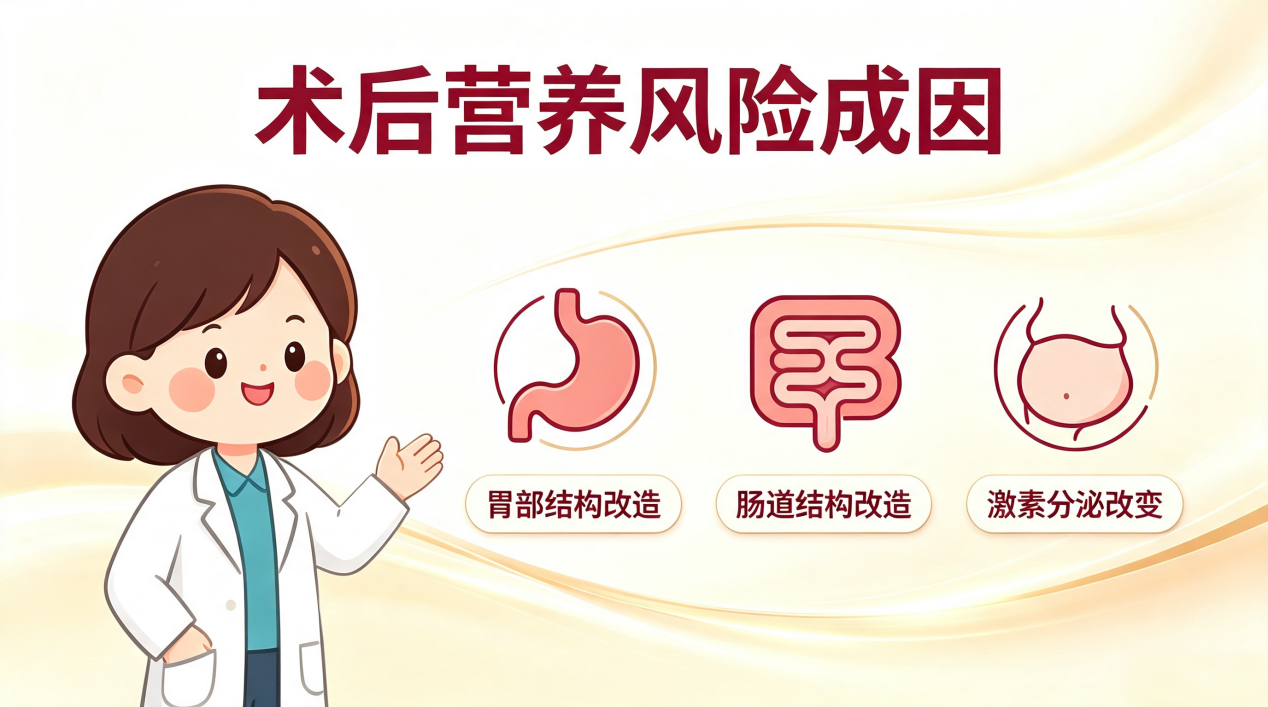
- 各类减重术式对胃部结构的改造有所区别,袖状胃手术切除大部分感知饥饿的胃底,胃旁路则构建小型储食胃囊,二者均缩减胃容量,少量进食即可触发饱腹感,受此影响,日常进食量下降,并可能因此引发营养摄入不足。
- 袖状胃手术不改动小肠,各类营养物质的吸收环境基本完好,而胃旁路、BPD‑DS这类术式会绕过隔绝一部分小肠,仅剩较短的肠段来混合食物与消化液,可供膳食营养吸收的路程缩短,多种维生素、矿物质还未被肠道吸收就会排出体外。旁路肠段越长,出现营养吸收不足的概率越高,接受这类术士的人群需要长期留意营养素的补充。
- 胃肠道结构改造影响肠道激素。袖状胃切除大部分胃底,饥饿素(Ghrelin)分泌随之减少,胃旁路改变食物通路,食物较早刺激远端小肠,促使饱腹激素(GLP-1和PYY)增多。这一机制是手术实现减重的关键优势,但肠道内分泌环境重置也与机体整体代谢相关,可能影响术后营养水平与长期手术效果。
结束语
一起学习和推广健康减重的方法和理念!
- 参考文献:
- Benson-Davies S, Frederiksen K, Patel R. Bariatric nutrition and evaluation of the metabolic surgical patient: Update to the 2022 Obesity Medicine Association (OMA) bariatric surgery, gastrointestinal hormones, and the microbiome clinical practice statement (CPS)[J]. Obes Pillars, 2025, 13: 100154.
- 声明:博客内容仅为营养健康科普参考,仅供医学专业人士阅览,文中内容不构成任何诊疗、用药建议,营养补充方案需结合个体情况、定期随访结果,在专业医护指导下实行,特殊人群(孕期、慢性病等)请提前就医评估。本文知识产权归拜瑞斐所有,未经授权,不得转载。